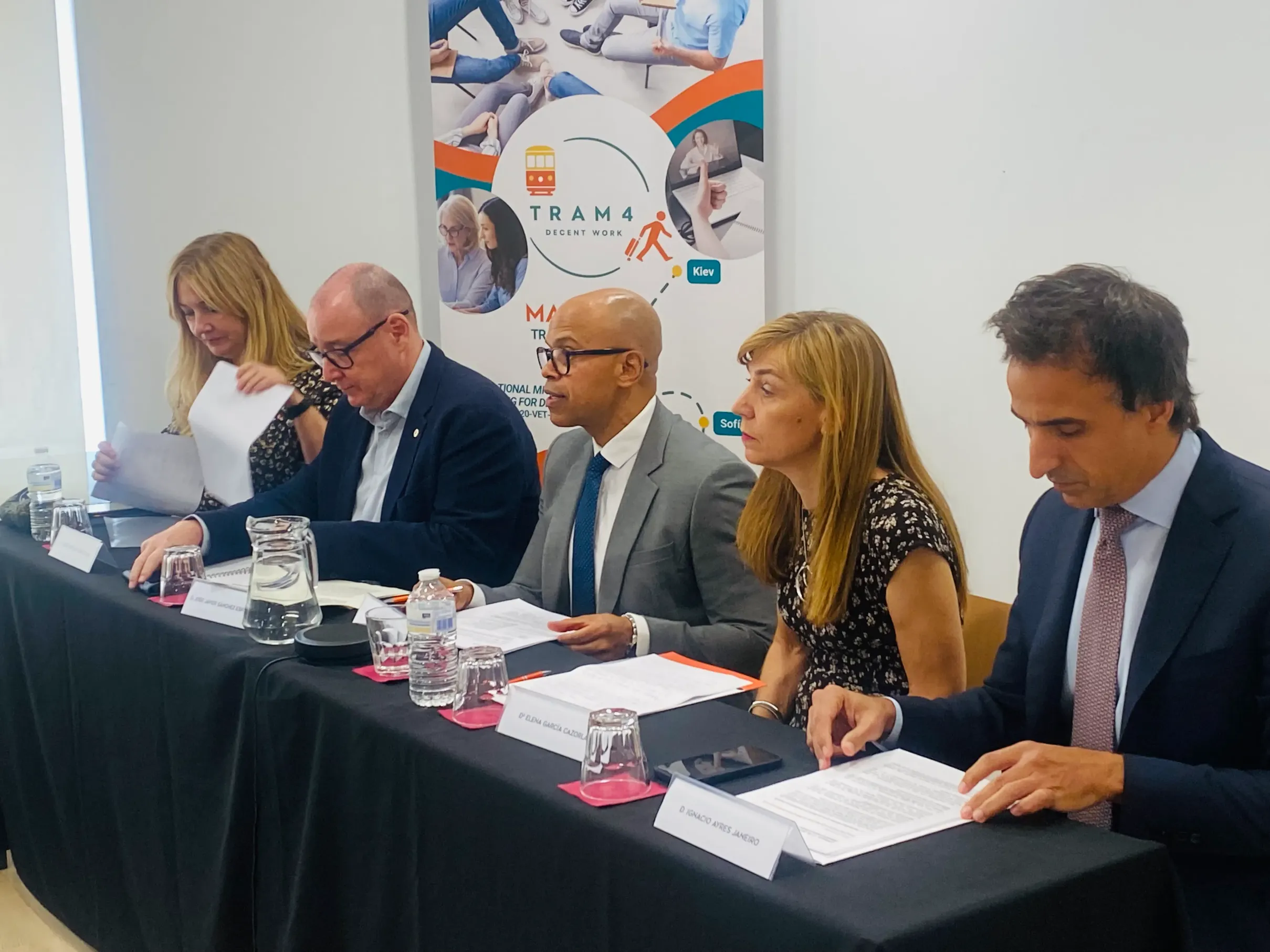
The initiative, organised as part of the European TRAM4DW project, brought together representatives from the public administration, academia, trade unions, social and business organisations to address the challenges of migration and European labour mobility. During the event, the launch of a new transnational advisory hub was announced.
The conference ‘Migrating with Rights: Challenges for Spain and Europe’, held on 17 September at the CEPI Madrid-Arganzuela and streamed live online, provided a space for dialogue, analysis and reflection on a key question: how to safeguard the rights of European citizens and legally resident migrants while advancing towards fairer and safer labour mobility.
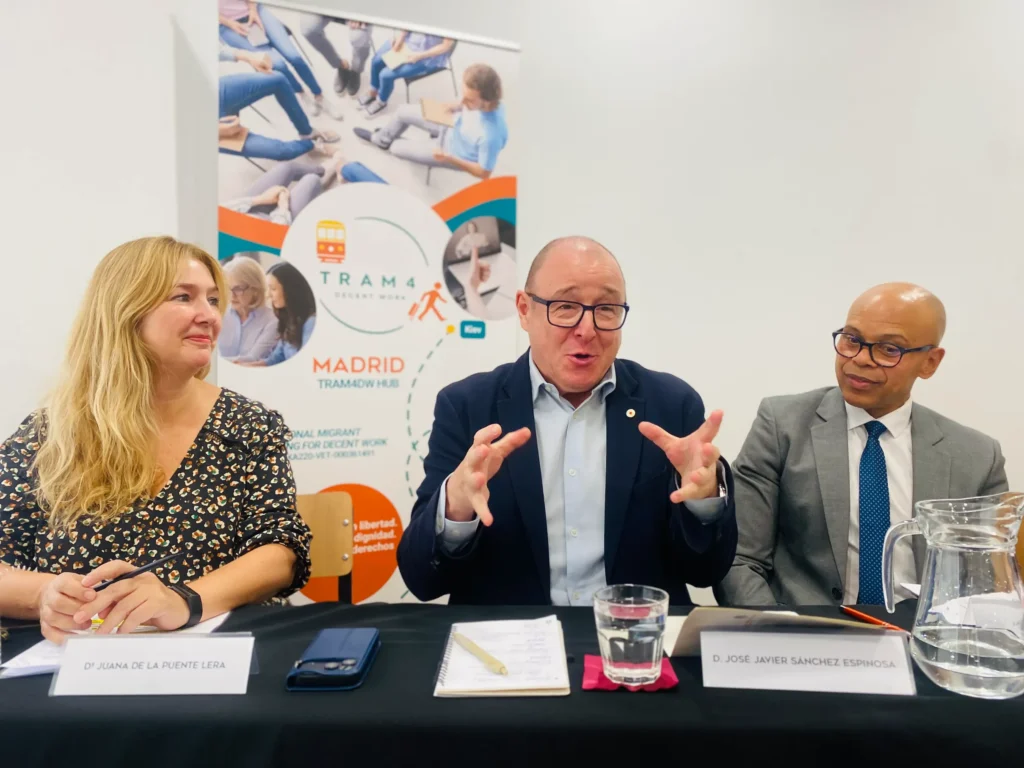
Organised as part of the European project TRAM4DW – Transnational Migrant Counselling for Decent Work, funded by Erasmus+ and implemented in Spain by the Complutense University of Madrid and the NGO ACCESOphia, the conference addressed, from different professional and institutional perspectives, the challenges posed by migration and labour mobility, with a particular focus on human rights as the foundation of a democratic society, the evolution of immigration legislation and access to rights. The initiative was organised in collaboration with the Directorate-General for Social Services and Integration of the Regional Ministry of Family, Youth and Social Affairs of the Community of Madrid.
The event was opened by María Dolores Domínguez García, the project’s principal investigator and lecturer in economics at the Faculty of Social Work, Complutense University of Madrid, and Guergana Tsenova, chair of the NGO “ACCESOphia”. Pablo Gómez-Tavira Gómez-Tavira, Deputy Minister for Family, Youth and Social Affairs of the Regional Government of Madrid, delivered a welcome address, emphasising the need for “a measured and calm reflection” on migration, “based on data rather than ideologies”. Similarly, he pointed out that the complexity of the phenomenon requires dialogue and responsibility and should not be used as a “political weapon” between parties nor become “a permanent political and institutional crisis”. The Deputy Minister advocated for prevention, planning and foresight in the management of migration policies and emphasised that integration entails not only rights but also duties.
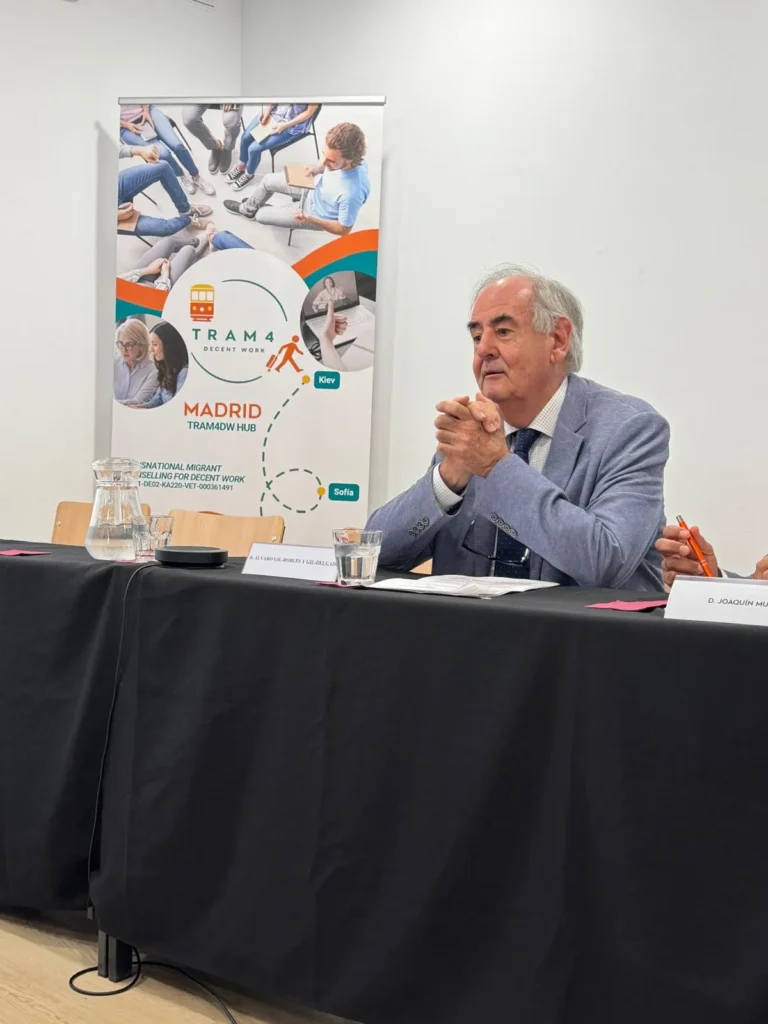
For his part, Álvaro Gil-Robles y Gil-Delgado, President of the Valores Democráticos Foundation and the Council of Europe’s first Commissioner for Human Rights, delivered a masterful opening address that moved the audience. In his speech, he noted that Europe must accept that migration is not a temporary phenomenon, but “a reality that is here to stay”, and therefore it must be managed permanently and in a controlled manner “for the safety of the migrants themselves” and with a long-term perspective. He also recalled that, historically, the peoples of Europe “have played a leading role in various intense waves of emigration,” a past that “many today seem to ignore or even deny when assessing the challenges posed by current migratory movements.” The prominent politician and human rights defender emphasised the urgency of “reaffirming Europe’s commitment to democratic values, those already enshrined in our founding texts” and called for the pursuit of consensus and solutions so that immigration is not approached out of fear and turned into a political battle.
Immigration and labour rights: the focus of the debate
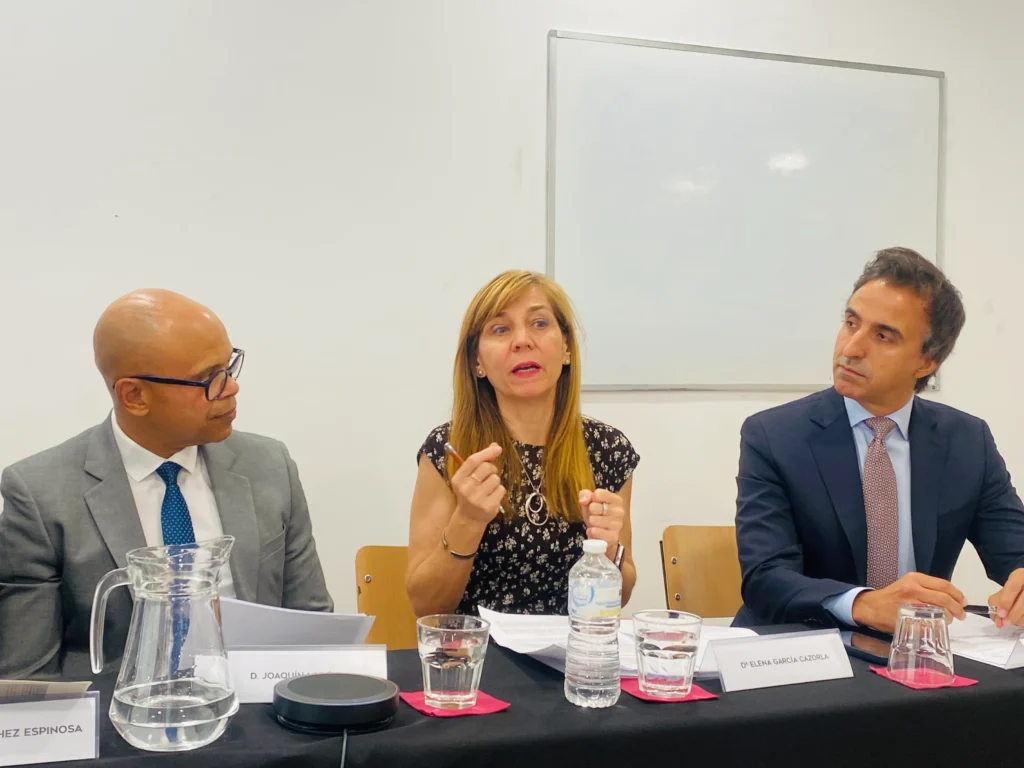
The first panel, entitled “Key Changes to Immigration Legislation in Spain and the EU: An Analysis from a Professional Perspective”, analysed the latest legislative developments and their impact from different angles. Speakers included Elena García Cazorla, a lawyer and lecturer at Rey Juan Carlos University; Juana de la Puente Lera, deputy to the Confederal Secretariat for Migration and Social Care at Comisiones Obreras; José Javier Sánchez Espinosa, director of Migration at the Spanish Red Cross; and Ignacio Ayres Janeiro, director-general of Social Services and Integration for the Community of Madrid.
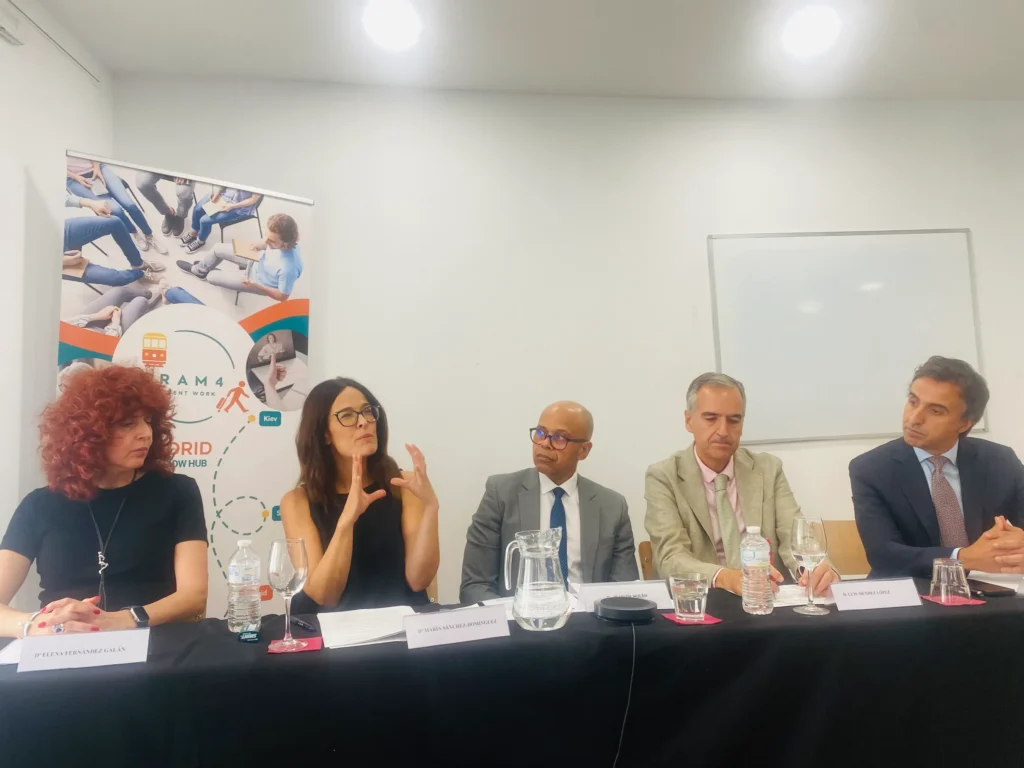
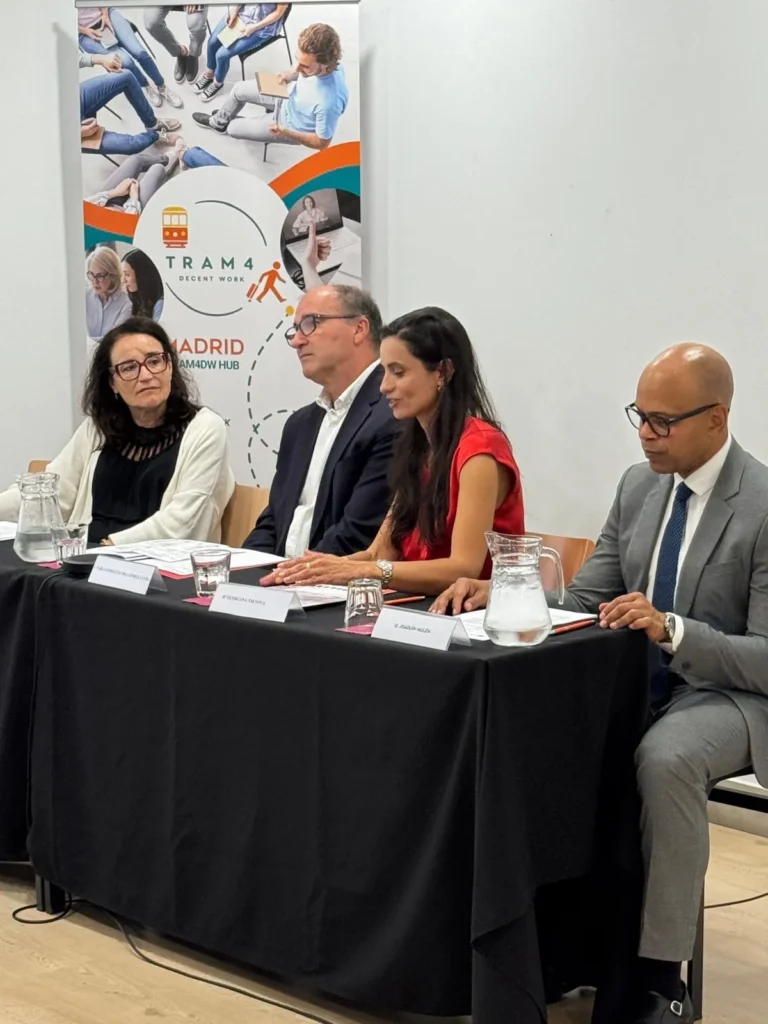
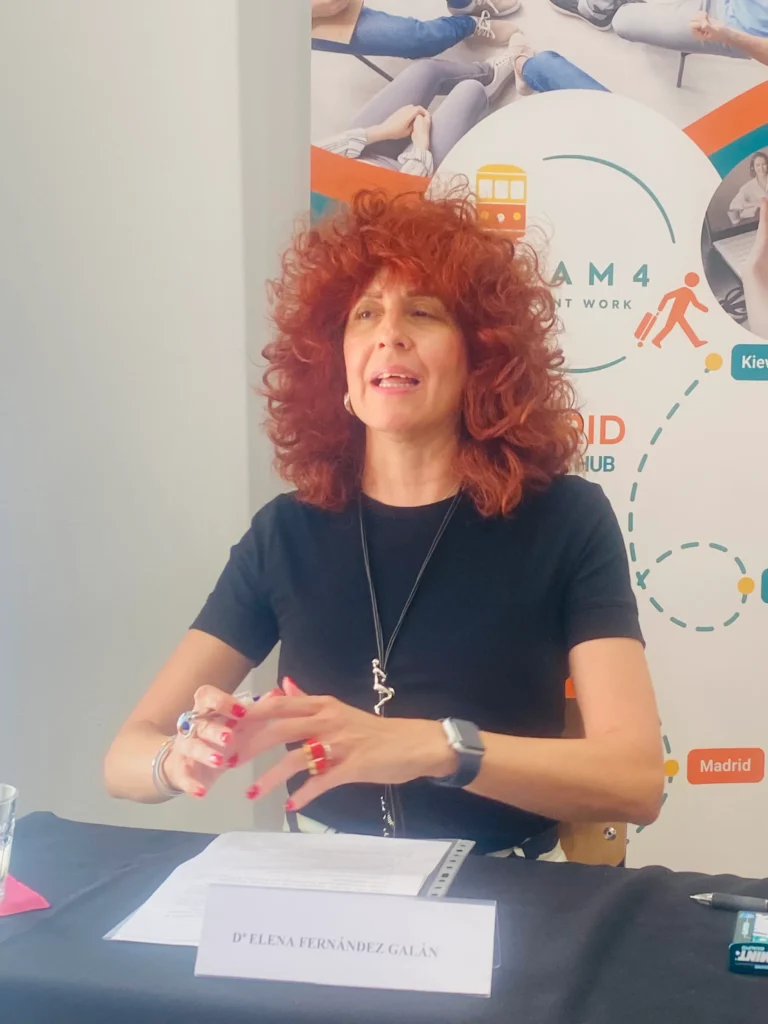
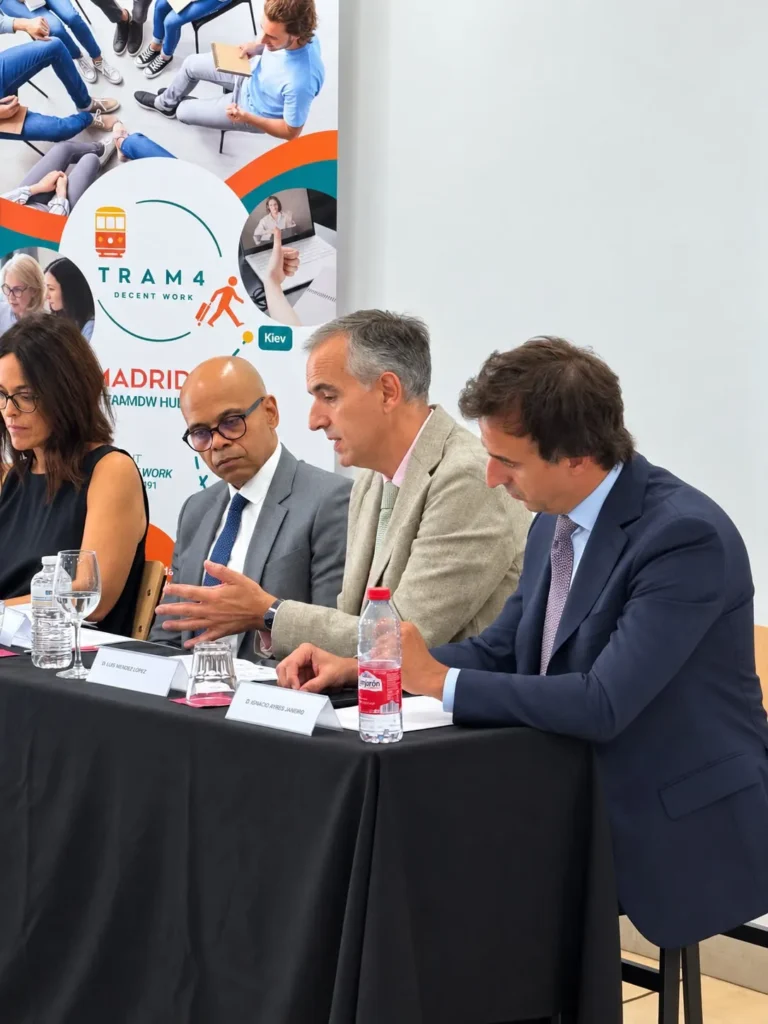
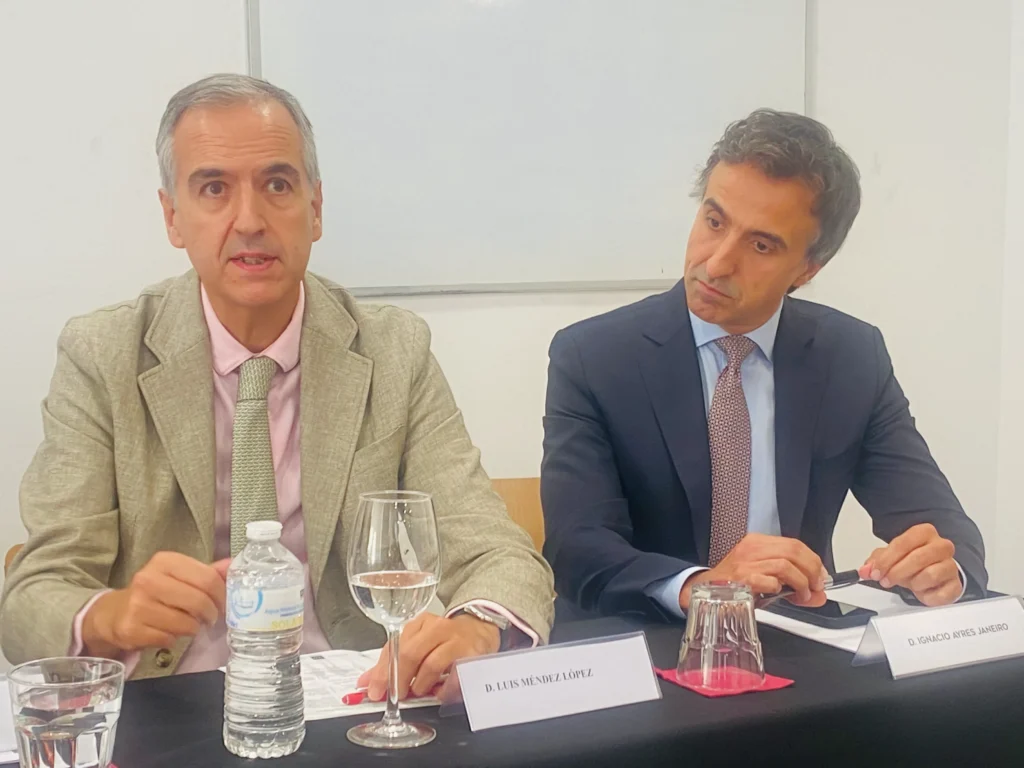
The second panel, ‘Labour and Social Rights of Migrants in Spain and the EU: Challenges and Opportunities’, addressed working conditions, social protection and the opportunities offered by labour mobility within the European Union. Participants included Elena Fernández Galán, national coordinator of EURES Spain; María Sánchez-Domínguez, professor of Sociology at the Complutense University of Madrid and principal investigator at CARELAB; Ignacio Ayres Janeiro; and Luis Méndez López, director of Labour Affairs at CEIM, the Madrid Business Confederation (CEOE).
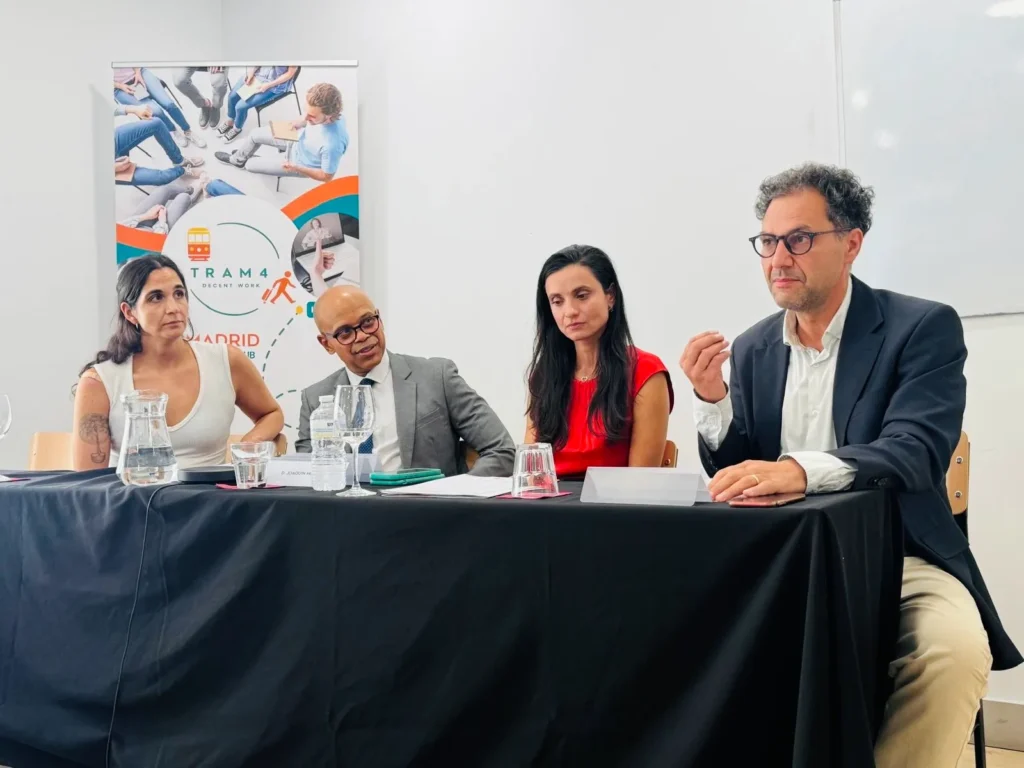
Both panels were moderated by Joaquín Mulén, a journalist with more than 25 years of experience in radio and television, who has successfully connected with audiences in countries such as Ukraine, Cuba, Italy and Spain thanks to his versatility and journalistic rigor.
One of the main conclusions was the need to provide public bodies dealing with immigration with greater human and material resources. Calls were made for greater administrative efficiency and standardised criteria, improvements to the functioning of the Catalogue of Hard-to-Fill Vacancies, better coordination between government bodies, more personalised support and recognition of the contribution made by migrants, whilst combating discrimination and the spread of hate speech. Planning emerged as an essential prerequisite. Well-developed policies require time, resources and foresight, and should not be implemented without a proper assessment of their financial and operational requirements. The work of the Community of Madrid’s Centres for Participation and Integration (CEPI) was highlighted as a key tool for bringing the administration and integration services closer to the public.
Challenges for the integration of migrants and the right to decent work
Similarly, employment emerged as one of the main pathways to autonomy and social integration. However, it was noted that situations of occupational segregation and the concentration of migrant workers in certain sectors and lower-skilled roles persist, even when they possess higher education qualifications. The challenge, therefore, lies in promoting decent work and genuine opportunities for career progression. Labour mobility must be informed, fair and safe. The need to combat fraudulent job offers and improve labour market transparency was highlighted. In this regard, tools such as EURES can facilitate the link between public employment services and cross-border job opportunities. The fundamental role of prevention was emphasised, as a person who is better informed before migrating is better placed to make decisions and reduce the risks of exploitation or fraud.
International cooperation was also presented as a tool that can help to reduce the causes forcing people to leave their countries. Another challenge identified was the need to streamline the standardisation and recognition of qualifications in order to make better use of migrant human capital. Integration must also take into account the diversity of migration profiles. Responses must consider circumstances such as gender, education, family situation and working conditions.
It was also noted that the Community of Madrid accounts for more than 20 per cent of newly created jobs in Spain, as well as 85 per cent of foreign investment in the country, making it a major centre of attraction. The availability of job vacancies in the region in sectors such as social and healthcare, construction and the hospitality industry, amongst others, was also highlighted. At the same time, it was noted that unemployment in Spain is double the European average and that migration flows require management that is planned and tailored to the needs of the labour market. The need to improve collaboration between employment services and small and medium-sized enterprises, which face difficulties in filling certain job vacancies, was also emphasised.
A new European labour mobility hub in Madrid
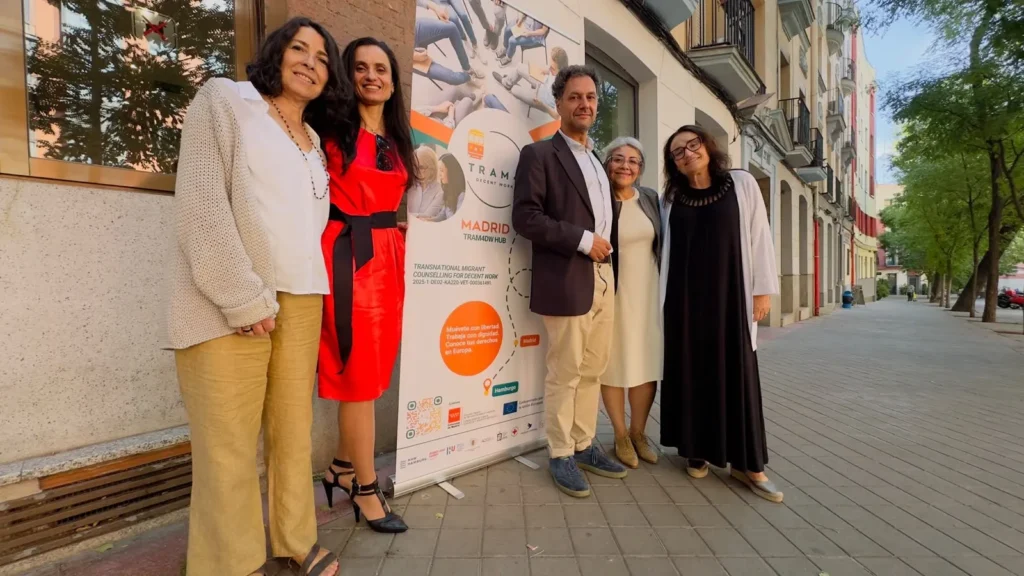
As part of the conference, the TRAM4DW project, “Transnational Migrant Counselling for Decent Work,” was officially presented, together with one of its key initiatives in Spain: the launch of the European Labour Mobility Hub (Madrid TRAM4DW Hub). The Hub provides transnational employment advice and will also be supported by a programme of talks and practical workshops delivered across the network of eight CEPIs in the Community of Madrid and aimed at facilitating access to employment and training opportunities in Europe and improving knowledge of labour and social rights. Planned activities include ‘How to write your Europass CV?’, ‘Employment opportunities in Europe with EURES’ and ‘How to live and work in another European country?’, amongst others. The aim is to provide tools to enable people to undertake temporary or permanent labour mobility in an informed and safe manner, helping to prevent situations of precariousness, exploitation and discrimination, and to promote equal opportunities.
The final part of the event also featured Consuelo Medina, the first trainee on the TRAM4DW project in Spain, who shared her personal experience, as well as Christo Karabadjakov, TRAM4DW project coordinator at the Hamburg University of Applied Sciences, who invited the audience to the upcoming international conference as part of the project, which will take place on 4–5 November in Sofia and will be streamed live.
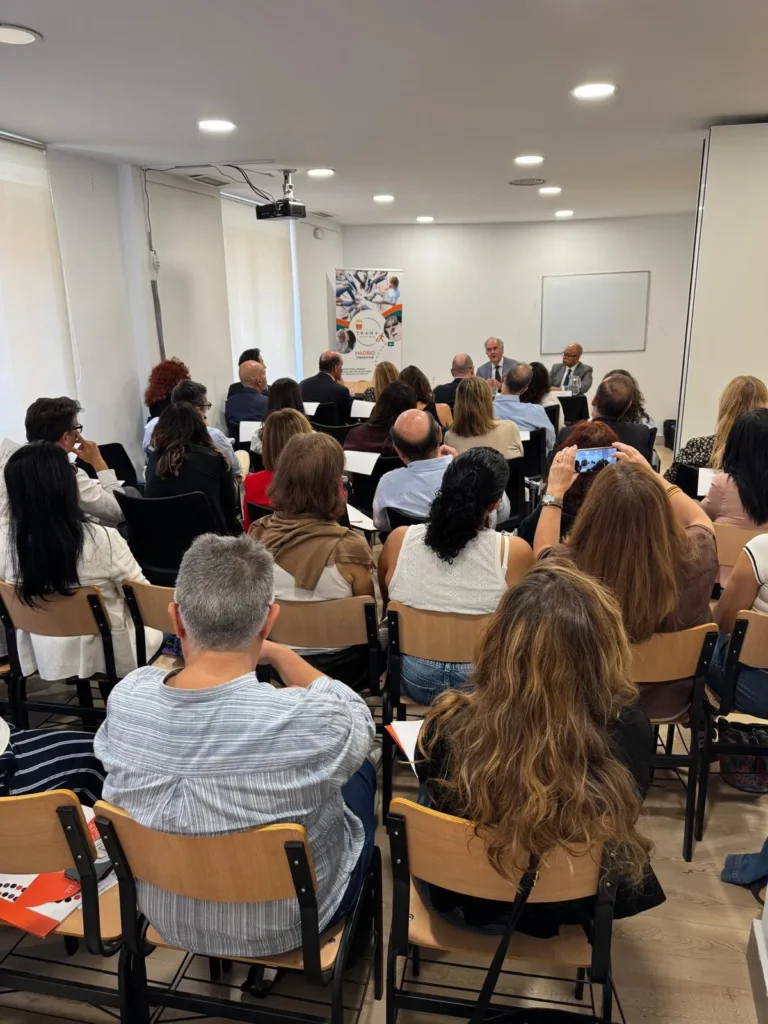
The event attracted a large number of participants, both in person and online, comprising mainly professionals from the Centres for Participation and Integration (CEPI), careers advisers and lawyers, as well as representatives from migrant associations, third-sector organisations, the academic world and other stakeholders involved in migration, employment and inclusion. The event also brought together representatives of the diplomatic corps from the countries participating in the TRAM4DW project: Boris Katsamunski, Second Secretary for Culture and Education at the Bulgarian Embassy; Sebastian Petzold, Counsellor for Employment and Social Affairs at the German Embassy; and Joris van Schie, Second Secretary at the Embassy of the Netherlands.
The event also received institutional support from Europe Direct Comunidad de Madrid and the European Documentation Centre, which provided various publications of interest on the European Union. These materials were made available and distributed to attendees as a supplementary resource.
During the event, the Altius Foundation, the organisation that runs CEPI Madrid-Arganzuela, provided a generous and varied coffee reception courtesy of its Hospitality School, prepared by the students.
TRAM4DW: transnational migrant counselling for decent work
TRAM4DW brings together nine organisations from five countries – Spain, Germany, the Netherlands, Bulgaria and Ukraine – under the leadership of the Hamburg University of Applied Sciences. The project, funded by Erasmus+, promotes decent work and develops capacities for preventive and transnational advisory services to support the labour mobility of European citizens and legally resident migrants. The initiative focuses on sectors facing labour shortages, such as construction, agriculture and the social and healthcare sectors, and seeks to prevent situations of exploitation and precarious employment through information, training and specialist advice.
A recording of the conference is available here.